
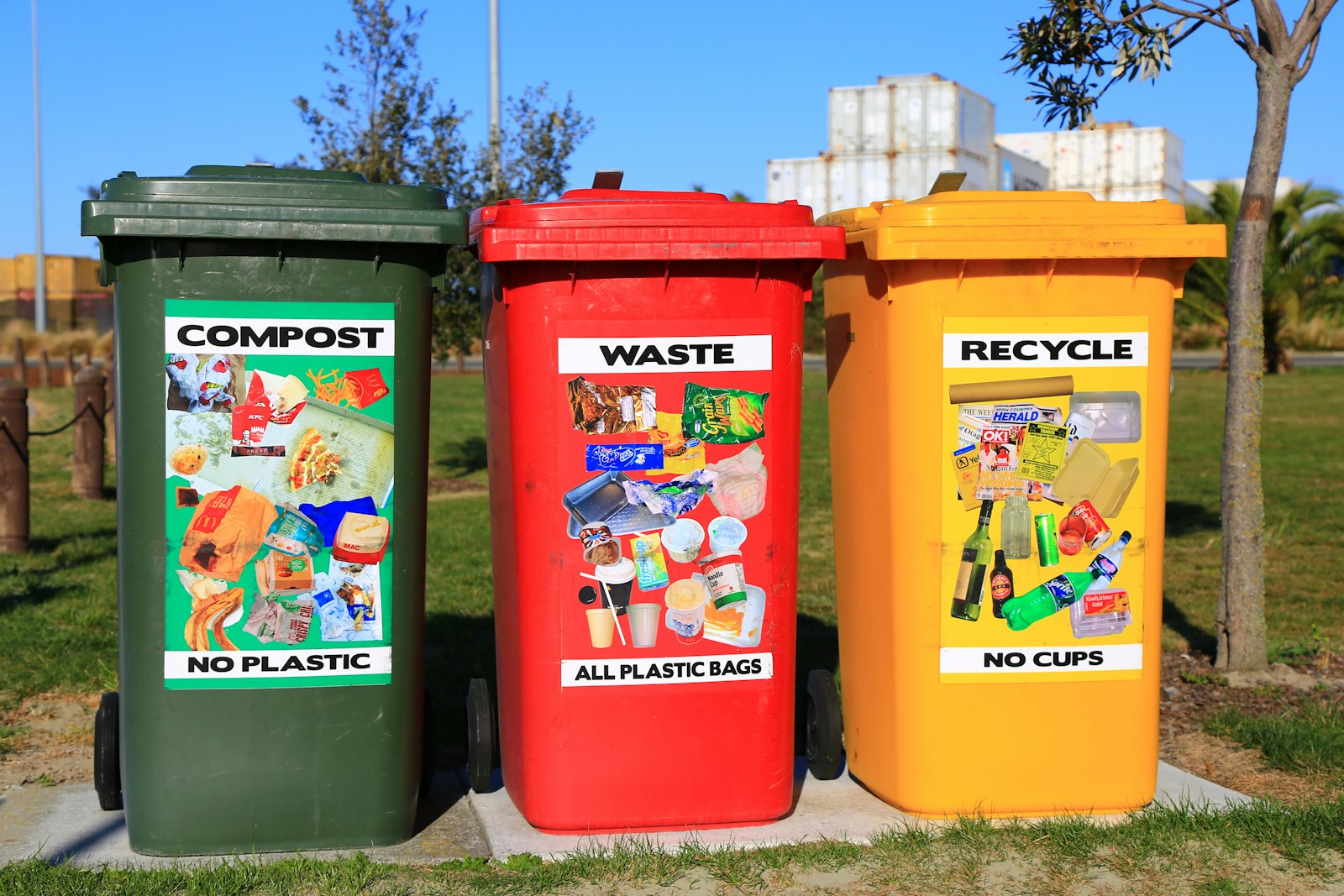
Christchurch’s three-bin system is simple on the surface — red for rubbish, yellow for recycling, green for organics — but the details trip people up every week. Wrong items in the wrong bin contaminate entire truckloads, which is why trucks get rejected and recyclables end up buried. Here is the practical guide, including the edge cases nobody is sure about.
The red bin: rubbish (landfill)
The red-lid bin is for general waste that cannot go anywhere else: soft plastics and plastic bags, polystyrene, coffee cups and lids, nappies and hygiene products, broken ceramics and crockery, vacuum dust, cigarette butts, and worn-out textiles. If it is not recyclable, compostable, or hazardous, it goes here.
What does not belong in red: anything recyclable that is clean (that is yellow’s job), food scraps and garden waste (green), and hazardous items — paint, chemicals, batteries, gas bottles, and e-waste all need specialist streams, never the red bin. Hot ashes are a classic mistake: let them cool completely for days first, or skip them entirely.
The yellow bin: recycling
Yellow takes rigid recyclables, and cleanliness matters more than most people think. Accepted: plastic bottles and containers numbered 1, 2, and 5 (rinse them — a peanut-butter jar caked in residue contaminates paper in the same truck), steel and aluminium cans and tins, paper and cardboard (dry, not wax-coated), and glass bottles and jars.
Common yellow-bin sins: soft plastics of any kind (bags, wrap, chip packets — these tangle sorting machinery and are the number one contaminant), coffee cups (plastic-lined, so landfill), polystyrene meat trays, lids smaller than a credit card (they fall through sorters — collect them in a larger container of the same material instead), and anything in a plastic bag. Never bag your recyclables: tip them in loose so sorters can see and separate them.
The number system confuses everyone. As a rule of thumb, plastics 1, 2, and 5 in rigid form are in; 3, 4, 6, 7, and anything soft or foamed is out. When in doubt, check the council’s online search for the specific item rather than guessing — wish-cycling (“it might be recyclable, in it goes”) does more harm than good.
The green bin: organics
Green takes food scraps of all kinds — fruit and vegetables, meat and bones, bread, dairy, tea bags and coffee grounds — plus garden waste: grass clippings, leaves, weeds, small branches, and flowers. This stream is commercially composted at high temperatures, which is why it accepts meat and bones that home compost bins cannot handle.
What stays out: plastic bags (even “compostable” ones unless certified for the local system — use newspaper or paper bags to wrap scraps), treated or painted timber, soil and stones in bulk, plant pots, and general rubbish. Flax and cabbage tree leaves are technically accepted but tell your mower story first — they are tough on domestic machines, though the commercial stream handles them.
Why contamination matters
A recycling truck with too much wrong material gets rejected at the sorting plant and the whole load goes to landfill — your neighbours’ careful sorting wasted because of a few bad bins. Contamination also jams machinery, slows processing, and raises costs for everyone. The ten seconds it takes to check an item is worth it.
Getting the whole household on board
The system only works if everyone in the house follows it, and the usual failure point is the kitchen bench at 7am. Put a small caddy or tub on the bench for food scraps so they never reach the red bin out of laziness, and stick a short list on the fridge: yellow takes clean rigid plastics 1, 2 and 5, cans, paper, cardboard and glass — everything else is red or green. Kids learn fast when the rule is simple, and flatmates comply when the caddy is closer than the rubbish bin. Landlords and property managers can do their bit by leaving the same note for new tenants, because every rental turnover resets the household’s habits.
Beyond the kerb
Bins have limits: cleanouts, renovations, big garden jobs, and bulky items need a different path — that is what our skip bin hire and household rubbish removal services are for. We sort every load so the recyclable and compostable fractions still reach the right streams.
Get the big three right — clean and loose in yellow, food and garden in green, everything else in red — and Christchurch’s system works the way it was designed to. For anything that does not fit a bin, call Rollerskips on 0800 475 500.
Need a hand with the pile? Call Rollerskips on 0800 475 500 — see our services.